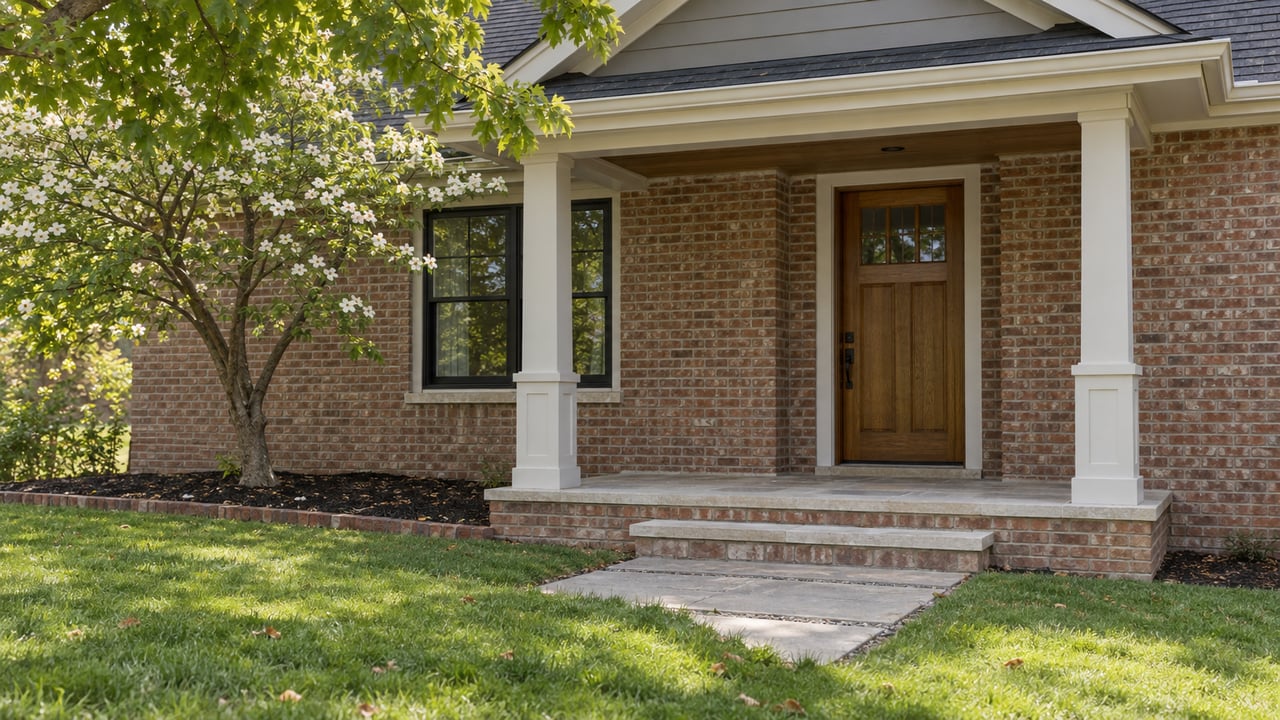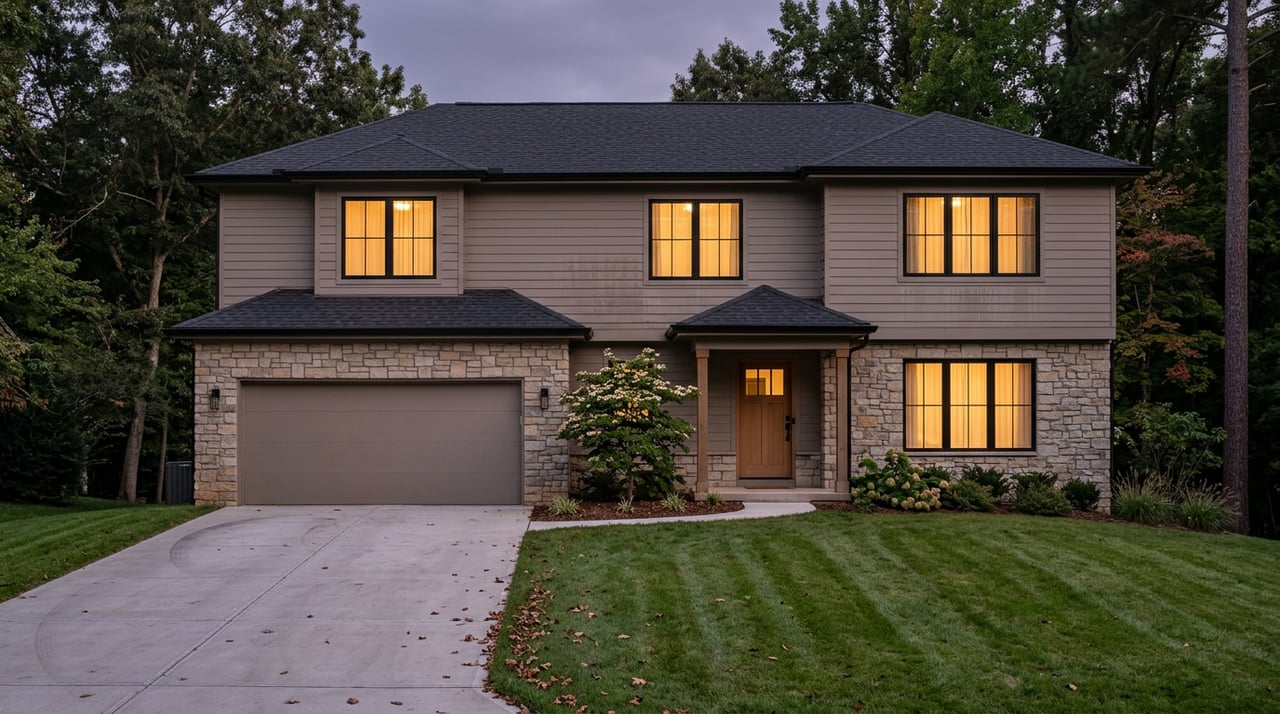
Picture two houses on the same cul-de-sac in Karns. Same builder era, same lot size, same asking price range. One closes in thirty days without a hiccup. The other sits in appraisal limbo for three extra weeks because the lender's underwriter wants proof that the well is far enough from the septic tank, and nobody can find the original permit.
The difference usually has nothing to do with the house itself. It has to do with which side of an invisible utility boundary each lot happens to sit on, a boundary that has nothing to do with the street address and everything to do with which water and sewer district ever ran a line down that particular stretch of road.
Karns doesn't have one water company. It has several boundaries.
Inside the City of Knoxville, water and sewer service is simple: you call the Knoxville Utilities Board and you're done. Karns is unincorporated Knox County, and unincorporated Knox County works differently. The City of Knoxville's own utilities page lists half a dozen separate water and sewer providers operating in the county outside city limits: KUB for the areas it does reach, plus First Utility District, West Knox Utility District, Hallsdale-Powell Utility District, Knox Chapman Utility District, Northeast Knox Utility District, and the Luttrell-Blaine-Corryton Utility District, each with its own service territory, its own rate schedule, and its own decision about where its pipes have and haven't been extended.
That last part is the piece that trips people up. A utility district's official service area is a boundary of eligibility, not a guarantee of connection. A subdivision can sit inside a district's territory for years before a line actually reaches it, and a house built before that extension happened may still be running on a private well and septic system even though the district technically serves the address today. First Utility District, for example, has operated in Knox County since 1954, drawing its supply from Fort Loudoun Lake and now serving more than 90,000 people. Sixty-plus years of gradual expansion means the age of the utility says nothing about whether your specific parcel got hooked up in year one or is still waiting.
This is why a buyer touring homes in Karns can't assume anything from the neighborhood alone. Two lots on the same road, platted a decade apart, can land on opposite sides of a hookup line that was drawn for reasons that have nothing to do with how nice either house is.
What an FHA, VA, or USDA appraiser actually measures
If the loan is conventional and the buyer isn't asking many questions, a well and septic setup rarely becomes a story. Government-backed loans are a different matter, because HUD's property standards spell out specific, measurable thresholds an appraiser has to check before the loan can close.
The commonly cited minimums, drawn from HUD's property requirements for wells and septic systems:
- The well must sit at least 50 feet from the septic tank and at least 100 feet from the drain field
- The well must be at least 10 feet from any property line
- Water quality has to test clean for total coliform (zero colonies per 100 mL), with lead capped at 15 parts per billion and nitrate at 10 milligrams per liter
- The well needs to sustain a flow of roughly 3 to 5 gallons per minute, tested by running multiple fixtures at once
None of these are guesses an appraiser makes by eye. They require an actual measurement, a water test, or documentation, and on a lot where the septic system was installed decades ago, finding that documentation can take longer than the rest of the closing combined.
There's a related rule worth knowing if a public line does run near the house: HUD requires connection to a public or community water system whenever it's feasible and reasonably priced. In practice, guidance used by mortgage underwriters treats a hookup cost above roughly 3 percent of the home's value as unreasonable, which triggers a waiver and lets the existing well or septic system stand as-is. So even a house sitting a few hundred feet from a utility district's main line can legitimately stay on private water and septic for the life of the loan, provided the system itself passes inspection. Proximity to a pipe is not the same as a requirement to use it.
The fee that shows up after closing, not before
Buyers who do end up on a utility district's water and sewer system sometimes discover a line item their inspection never flagged. First Utility District's current rate schedule includes an extra $12 monthly charge for any residential customer whose wastewater runs through a grinder pump system the district maintains, on top of the standard sewer bill. Grinder-pump service is common on lots where gravity alone can't move wastewater to the main line, which describes a fair amount of hillier Knox County terrain.
New construction carries its own version of this surprise. Developers connecting a new subdivision to a district's sewer system pay a capacity reservation fee calculated per gallon of expected flow, a cost that gets built into the price of new homes in ways a buyer touring a finished subdivision never sees itemized. None of this is unusual or a red flag on its own. It's simply a cost structure that looks nothing like a typical city utility bill, and the only way to know it applies to a specific address is to ask the district directly before writing an offer, not after.
The one test that has nothing to do with your water source
Regardless of which side of the utility line a Karns house falls on, there's a test that applies to essentially every property in the county: radon. Knox County's limestone geology places it inside the EPA's highest radon-risk designation on the national radon zone map, and that classification has nothing to do with whether a house is on a well or a public system, whether it has a crawl space, slab, or basement, or how old it is. Local home inspectors treat a radon test as close to standard practice on any Knox County purchase, precisely because the geology underneath the whole area produces elevated readings in houses of every age and construction type. It's a separate line on the inspection invoice, but it's one of the few things on this list that doesn't depend on which utility district your lot happens to sit in.
How to find out before you're under contract
The good news is that almost all of this is knowable in advance, if you know where to look.
Tennessee's Division of Water Resources maintains a statewide septic system records search organized by county, subdivision, and lot number, which can surface the original permit for a property's septic system, including its design capacity and layout. If the online search comes up empty, the state also offers a formal Inspection Letter service for $200, where a Division of Water Resources representative visits the property and verifies the system against its records, a service built specifically for real estate transactions where the paper trail has gone cold.
Knox County's own Health Department runs a parallel service through its Groundwater Protection division, which will review its files on a specific property and send an environmentalist out to confirm the septic system is functioning and that there's enough room on the lot to repair it if it ever fails. That verification is exactly the kind of documentation an FHA or VA appraiser is going to ask for anyway, so getting it early, before an offer rather than during underwriting, removes one of the more common reasons a Karns closing runs long.
The larger habit worth building, before touring anything in Karns, is asking the listing agent one direct question: which utility district, if any, actually serves this specific parcel, and is the connection already made or only theoretically available. It's a five-minute phone call that can save three weeks at the appraisal stage.
A few common questions
Does every home in Karns have a septic system? No. Karns includes a mix of subdivisions on public water and sewer through one of several Knox County utility districts, alongside older and more rural-lot properties still running on private wells and septic systems. The mix varies block by block rather than following any single pattern across the community.
Will a well or septic system automatically disqualify an FHA or VA loan? Not automatically. The system has to meet HUD's distance and water-quality standards and pass local health authority review, but a well and septic system that checks out is fully acceptable for a government-backed loan. The issue is usually timing, since gathering the documentation an appraiser needs can take longer than a typical closing window if nobody starts early.
Is a radon test required, or just recommended? It's not a legal requirement, but given Knox County's radon-zone designation, it's routinely built into inspections as standard practice regardless of the property's water source.
If you're weighing a purchase or a sale in Karns and want to know exactly which utility questions apply to a specific address before you're locked into a contract, the team at The REAL ESTATE Office has walked enough Knox County closings to know where these things tend to surface. Reach out for a free home valuation and a straight answer on what your address is actually working with.